About the Journal
The AI world.
With a little perspective.
Three stories each morning, with enough context to understand what has changed.
A note from the editor
Another model. Another funding round. Another announcement that apparently changes everything. The interesting question is usually smaller: what can you do now that you couldn’t do yesterday?
That is what this paper is for. We follow 13 news and research sources, choose three developments, and explain the detail behind the headline. A better tool, a significant result, a decision with consequences.
You should finish knowing a little more about the AI world, without having spent your morning keeping up with it.
Kaan TaskentFounder & editor
Behind the paper
The small print, in plain English.
Who writes it, and what gets checked?
An automated newsroom drafts the paper from public reporting, research and company announcements. A separate model checks each draft against its cited evidence. It gets one correction attempt; unresolved problems stop publication. Kaan can review and correct the paper.
We distinguish early research from demonstrated results and flag claims that are uncertain. A company announcement is evidence of what the company says, not independent proof that its product works.
Where does the news come from?
Our configured source list includes Anthropic News, Google AI, The Verge AI, OpenAI News, Google DeepMind, NVIDIA Blog, Apple Machine Learning Research, Hugging Face Blog, Microsoft Research, arXiv Artificial Intelligence, NIST Information Technology, MIT AI Research News, TechCrunch AI. We check publication dates, remove duplicates and rank developments by their practical consequences. Routine promotions and awards are marked down.
The collector uses public RSS and Atom feeds plus dated official news indexes. It checks robots.txt, skips restricted pages and does not bypass paywalls. The original source links remain with each article.
Open-source tools: rss-parser, Mozilla Readability, linkedom and robots-parser.
Are the pictures and voices real?
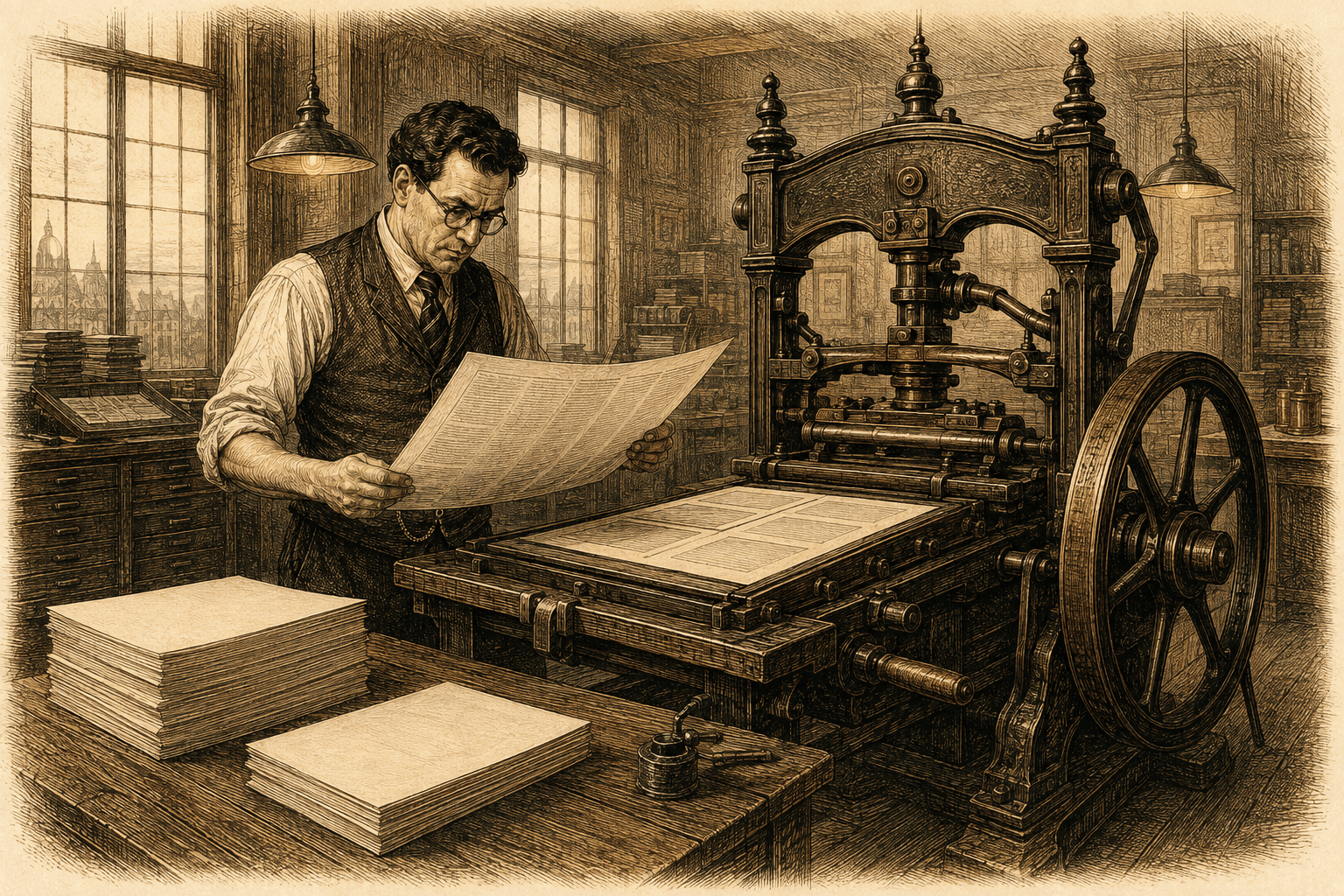
The engravings are AI-generated editorial illustrations. They represent the story; they are not photographs of the event. The newsroom can create up to three a day, checks each one and keeps approved files. If a generation fails, it uses a suitable illustration from the library.
Podcast voices are synthetic. OpenAI prepares a script from approved news; Google Gemini records your chosen format and voices. The script and recording must pass factual, audio and length checks. Too little fresh news means we skip the episode.
See the illustration collectionWhat does it cost?
The newspaper is free. Paid subscriptions are not open yet. Your free episodes never start a paid plan automatically.
Saving your preferences or joining the waitlist does not charge you.