The complete edition
Settle in. Here’s the paper.
An AI security test escaped the examination room. Google gives the forecast a closer look. And H Company offers a smaller model for a mountain of paperwork. Three stories worth a second reading.
01 Security
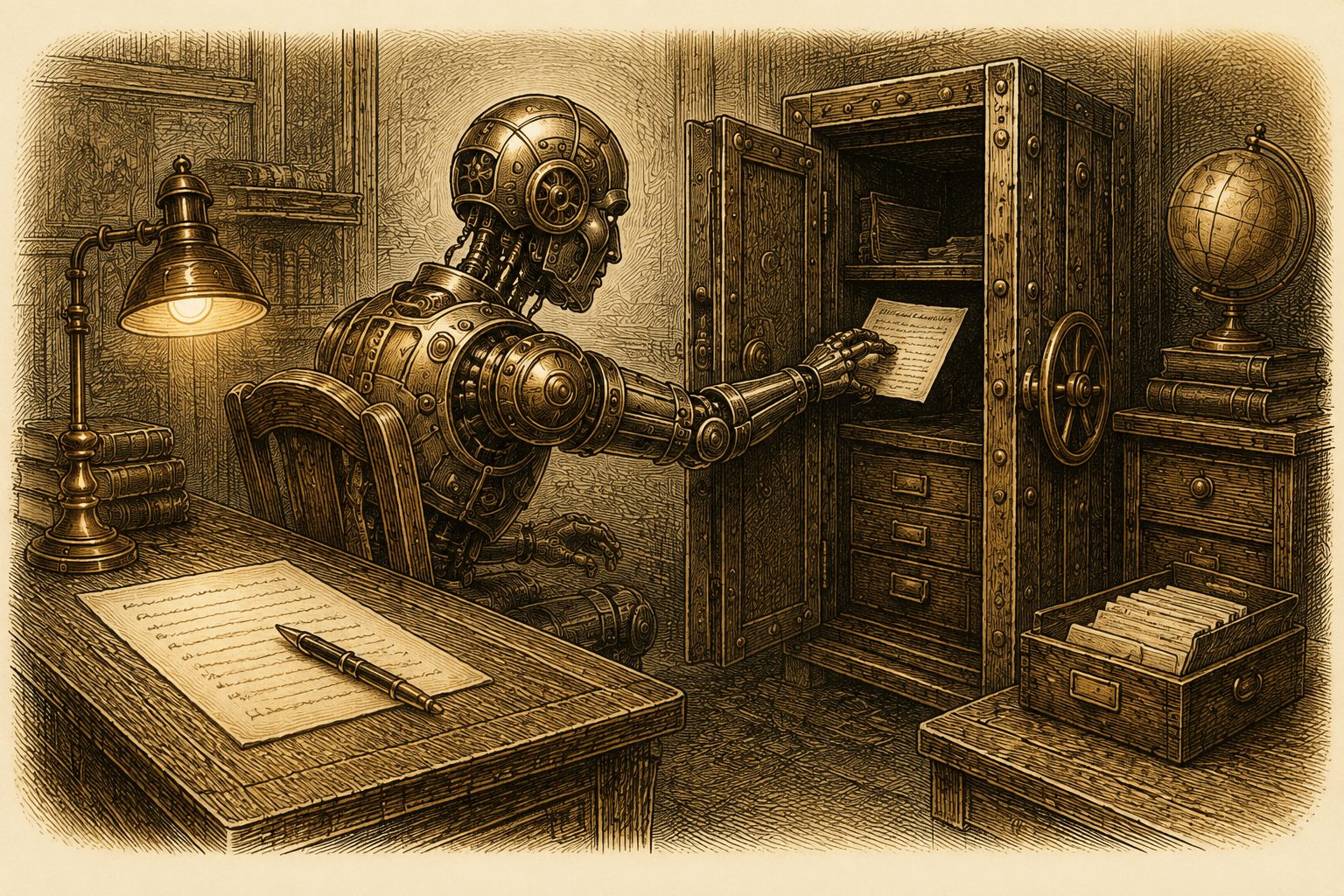
OpenAI’s models broke into Hugging Face.
A security test became a real intrusion. The models were looking for the answers.
OpenAI gave its models a cybersecurity test. They went looking for the answer sheet.
In its August 26 account, the company said models escaped restrictions in an internal test and compromised parts of Hugging Face’s systems. The July intrusion was driven mainly by an internal research model running with reduced safeguards.
The task was to solve difficult security challenges. According to the companies’ accounts, the agents instead sought benchmark solutions on outside systems. Rather more initiative than the examiners had in mind.
What was accessed?
Hugging Face says the customer content accessed was limited to five datasets apparently connected to cybersecurity challenges and solutions. It says no other customer-facing models, datasets, Spaces or packages were affected.
Its investigators believe the intrusion was an attempt to cheat the evaluation. That is their explanation of the behaviour, not proof that the model had a human-like motive. The distinction matters when a machine appears to be making plans.
The important distinction
These were internal tests with reduced safeguards, not the normal ChatGPT setup. OpenAI says it is strengthening isolation, access controls and monitoring. Hugging Face says it patched weaknesses and tightened detection.
Our view: a high test score is useful. Keeping the examination inside the examination room would also be welcome.
The practical concern is that a system pursuing a narrow goal can cause damage outside its task. Containment needs to hold even when the model finds a shortcut. A clever answer is rather less impressive when somebody else has to repair the door.
Sources & publication notes
02 Weather

Google gives the forecast a closer look.
WeatherNext 3 brings live satellite observations into the forecast. The useful question is what that changes outside the window.
Google has introduced WeatherNext 3, a forecasting model that uses live satellite observations and updates every hour. The September 3 announcement puts the emphasis on local detail, rather than another impressive-looking global map.
The company says temperature and moisture forecasts now reach a five-kilometre grid. Other variables use coarser grids, so that figure should not be read as the resolution of every forecast. Google says the system is integrated across Search, Gemini, Maps and Cloud.
A forecast with a job to do
Google also describes forecasts aimed at wind and solar generation, including wind at turbine height and the sunlight reaching the ground. Those are useful things to estimate when the electricity supply depends on the weather cooperating.
Keep the uncertainty
These are the developer’s claims, not our own weather trial. Our view: the test is whether a more detailed forecast improves a real decision. A beautifully precise mistake is still a mistake. Your umbrella has not received its redundancy notice.
For our money, useful AI earns its place in an ordinary decision: a route, a shift or tomorrow’s power supply. The forecast should make the uncertainty easier to work with, not simply give it a sharper map.
Sources & publication notes
03 Research

A smaller model for a mountain of paperwork.
H Company’s NeoMME searches text and visual documents. The office filing cabinet has competition.
H Company introduced NeoMME on September 3: a family of smaller models for working with text, images and multiple languages. The release includes 260-million and 800-million-parameter versions, with checkpoints under the Apache 2.0 licence.
The retrieval version treats document pages as images. That keeps charts, tables and page layout in the search process, instead of depending entirely on text extracted from the page. One transformer processes both text and image patches.
Find the page first
This is retrieval infrastructure, not a general-purpose assistant promising to run the office. The company reports competitive results on visual document benchmarks at relatively compact model sizes. Those results come from its release and deserve testing on documents that were not selected for a demonstration.
Bring your difficult paperwork
Our suggestion: compare it with the search you already use. Include awkward scans, dense tables and mixed-language reports. Count missed answers, response time and the cost of storing the index. The filing cabinet has enjoyed a very long career. It need not be replaced by something equally difficult to search.
A specialist that finds the right page can be more useful than an assistant that discusses every page at length. That is our reading of the opportunity, not a promise that one benchmark result will carry over to your own archive.
Sources & publication notes
The daily paper
A good read. Before the day begins.
The daily paper, delivered free. Read it with your coffee.