The complete edition
Settle in. Here’s the paper.
Three developments with immediate consequences: authors are disputing how Anthropic settlement money is being claimed, Travis Kalanick’s Atoms is reportedly circling robotaxis, and a new preprint argues that stronger model agents can make a market system less stable under shared misinformation.
01 Policy

Authors dispute publishers’ claims to Anthropic settlement money
Some writers say publishers and agencies are claiming money they may not be owed. The dispute turns on rights records and payment splits.
TechCrunch reported that some authors due money from Anthropic’s copyright settlement were told that another party had claimed part of their payment. The settlement, which TechCrunch says received final approval in July, covers nearly 500,000 titles and sets payment at $3,000 for each pirated work.
According to TechCrunch’s account of the settlement terms, in-print traditionally published books are meant to split the payment equally between author and publisher. Self-published books, or books whose rights had reverted because they went out of print, should pay the author in full. Authors posting publicly say some publishers have claimed money on books whose rights reverted long ago, while others appear to have claimed 100% where only 50% would be due.
What is contested
TechCrunch says Victoria Strauss of Writers Beware has been hearing two recurring complaints: publishers claiming on reverted titles and publishers claiming the full amount rather than their half. Strauss also said some literary agencies were making claims, which she regarded as surprising because agents are not rightsholders in the books they sell.
The article also notes some publishers have said the errors are mistakes and have asked Anthropic to correct them. Mary Rasenberger of the Authors Guild told The New York Times, as quoted by TechCrunch, that she did not view the problem as a deliberate grab so much as a product of poor recordkeeping and a complicated process. One practical limit remains awkward: authors disputing a claim may need to show that rights reverted before 10 August 2022, the settlement’s download date. Paperwork, as ever, has stamina.
This is not just a literary family quarrel. The case shows how AI copyright settlements can turn on old contract data, rights reversions and intermediary records. If those records are wrong, payment systems for large-scale AI disputes become messy quickly, even after a court case is settled.
Sources & publication notes
02 Companies

Atoms reportedly eyes robotaxis and talks with Uber
Travis Kalanick’s startup is reportedly preparing to hire and make acquisitions in autonomous vehicles. Talks with Uber concern its robotaxi technology.
TechCrunch reports that Atoms, the startup founded by Travis Kalanick, may be moving into robotaxis in earnest. The article says the Financial Times reported that Atoms is preparing for a hiring spree and acquisitions that could make it a more serious player in autonomous vehicles.
The same report, as described by TechCrunch, said Atoms has discussed with Uber how the ride-hailing company could use Atoms’ robotaxi technology. TechCrunch adds that Uber has already partnered with many autonomous vehicle companies, and says Uber’s $100 million investment in Atoms had been previously confirmed by TechCrunch.
What is known and what is not
TechCrunch is careful not to present robotaxis as the whole plan. Its piece says sources emphasised that autonomous taxis are not the entirety of Atoms’ ambitions, even if the direction fits Kalanick’s description of the company’s work as unfinished business.
There are at least a few tangible markers around the edges. TechCrunch notes Atoms announced a $1.7 billion funding round earlier in the summer and acquired Pronto, an autonomous mining startup led by former Uber self-driving executive Anthony Levandowski. Even so, the present account rests on reported talks and preparation rather than a public launch, product rollout or signed commercial deployment.
For Uber, Atoms and rivals in autonomy, the practical question is not whether robotaxis sound futuristic but who supplies the stack, who owns the fleet relationship and how quickly capital turns into deployed service. Reported talks suggest Atoms is trying to become a platform contender, not merely a well-funded mystery.
Sources & publication notes
03 Research
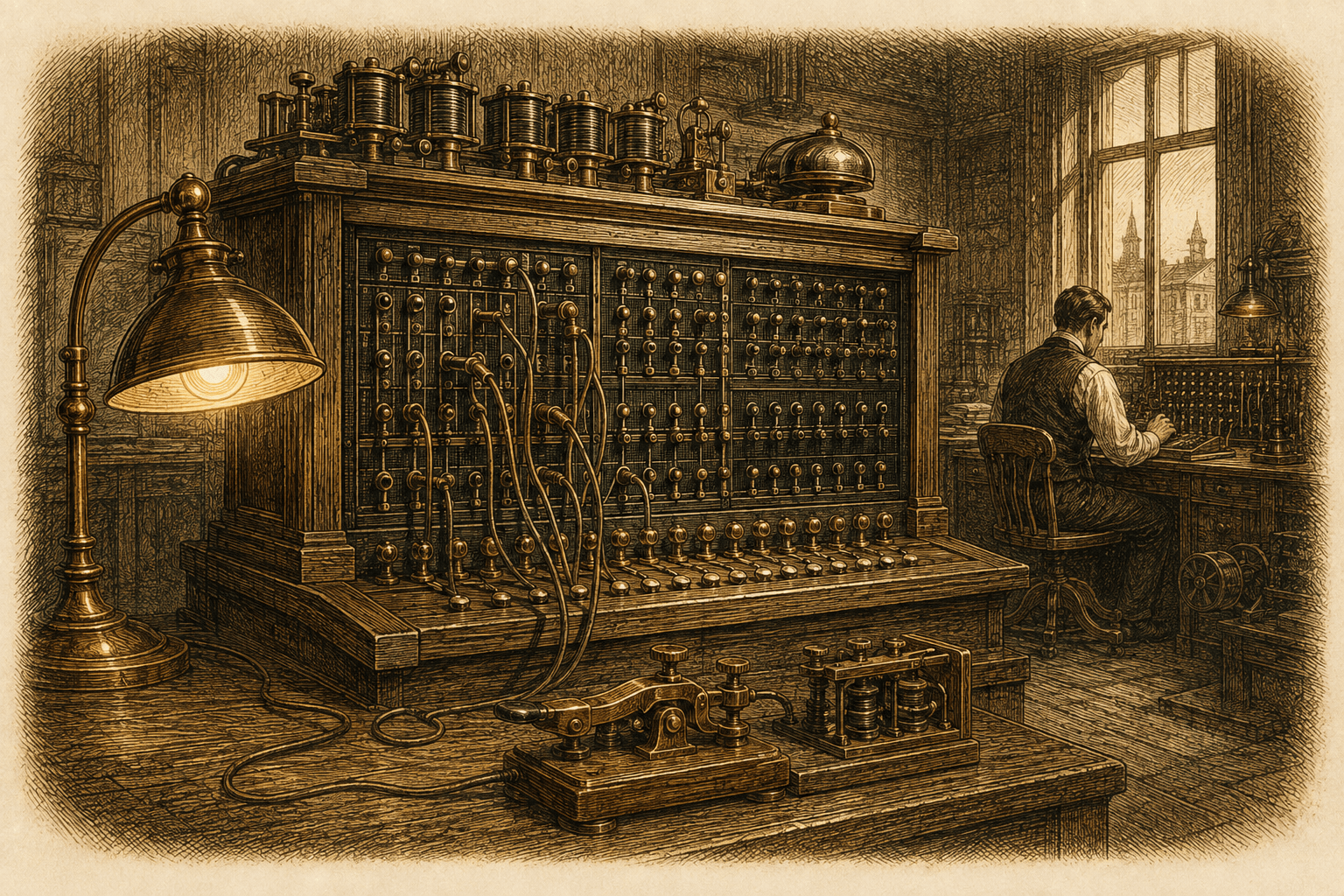
Smarter AI traders can magnify risk, simulation suggests
More capable trading agents can make the same mistakes together. A preprint finds that shared misinformation turns their similar behaviour into a market risk.
A preprint posted to arXiv by the authors argues that improving individual large language model agents can worsen outcomes at system level. Their claim is that shared training and architectures may cause stronger agents to behave more similarly, producing correlated actions that do not diversify away.
To test the idea, the authors used an agent-based financial market simulation with LLM traders of differing general-purpose capability. In the abstract, they report three main findings: frontier models showed significantly correlated behaviour that rose with capability; when the agents’ shared reasoning was accurate, greater participation reduced market-level risk; and when the agents shared a common misinformation environment, the same correlation became a liability.
What follows from that
The paper describes this as a capability paradox: making each model better does not necessarily improve the wider system. That matters because LLMs are being used in consequential settings well beyond toy tasks, including, as the authors note, finance, content moderation and hiring.
The limits are important. This is an arXiv preprint, not peer-reviewed research, and the evidence cited here comes from simulation rather than live markets. The authors also say whether the same dynamics appear in other domains remains an open empirical question. Still, it is a useful warning against assuming that a sharper individual agent will always produce a calmer crowd.
Firms adopting similar frontier models may not get the diversification benefits they expect if those systems respond in much the same way, especially when fed the same bad information. The practical implication is governance: test portfolios of agents as systems, not just one model at a time.
Sources & publication notes
The daily paper
A good read. Before the day begins.
The daily paper, delivered free. Read it with your coffee.